Crypto for beginners, a practical framework for your first investment
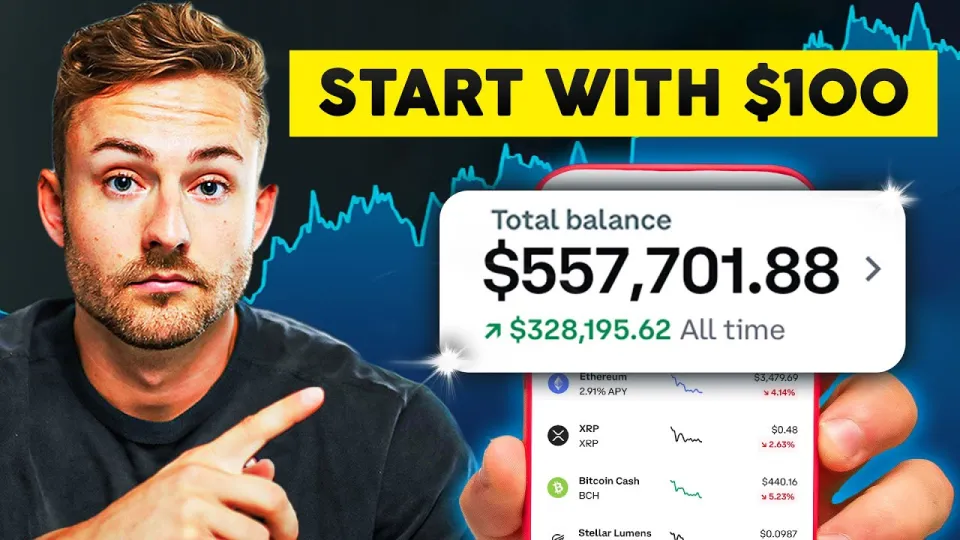
Video: How To Invest in Crypto as A COMPLETE Beginner [2025 GUIDE]
Need articles like this for your video? They help promote it on YouTube and Google — order them in the Telegram bot @sat_sit_bot. Articles with your video embedded are written and posted by the bot itself — on popular topical sites (no ads). Free trial — 50 articles.
Crypto investing for a complete beginner means buying a small, affordable amount of Bitcoin or Ethereum on a regulated exchange, storing it in a wallet you control, and treating it as high-risk capital you can afford to lose. The goal of the first year is not to get rich — it is to learn how the market behaves, how custody works, and how you react to a 30% drawdown. Craig Percoco's beginner walkthrough frames the same idea: start small, learn the fundamentals, and only then consider trading. A free starting point for learning the basics is the free trading education link from the video.
What crypto actually is and why beginners should care
Crypto is a market of digital assets settled on blockchains — public ledgers that record ownership without a bank in the middle. Bitcoin, launched in 2009, is the first and largest, designed with a hard cap of 21 million coins; Ethereum, launched in 2015, added programmable smart contracts that let developers build tokens, stablecoins and decentralized applications on top. That combination — scarce supply on one side, an open development platform on the other — is why the sector attracts both long-term investors and short-term speculators.
The case for paying attention is simple: crypto is a young, fast-moving market where retail participants can access the same assets as institutions. The case for caution is equally simple: the same market regularly produces 70–90% drawdowns, failed projects and outright fraud. Both facts are true at once, and a beginner who internalizes only one of them usually loses money.
The five fundamentals to check before buying any coin
Fundamentals are the questions you answer before money leaves your account; if you cannot explain in one sentence what a token does and who pays for it, you are speculating, not investing. Work through this checklist for every asset:
- Tokenomics. Total supply, circulating supply, inflation rate and the unlock schedule for team and investor tokens. A coin with 80% of supply still locked will face heavy selling pressure later.
- Use case and demand. Does the token pay for something real — fees, storage, compute, governance — or is it purely a meme? Demand must come from users, not only from new buyers.
- Team and funding. Who builds it, who backs it, and are those backers locked up or free to sell.
- Liquidity. Daily trading volume and depth on major exchanges. Thin liquidity means wide spreads and brutal slippage on exit.
- Track record. How the asset behaved in the previous bear market, and whether development continued when prices fell.
For most beginners the honest answer after this checklist is to hold Bitcoin and Ethereum as the core and treat everything else as a small, optional satellite.
Technical analysis: what it can and cannot do for you
Technical analysis is the study of price and volume charts to time entries and exits; it does not tell you what an asset is worth, only how buyers and sellers have behaved. A workable beginner toolkit is small:
- Higher timeframe trend. Look at the weekly and daily chart first. Buying against a clear downtrend is the most common beginner error.
- Support and resistance. Mark the price zones where the market previously reversed, and place decisions around them rather than in the middle of nowhere.
- Moving averages. The 50-day and 200-day averages give a rough read on trend direction without cluttering the chart.
- Volume. A breakout on weak volume is usually a trap; a breakout on expanding volume is more credible.
Treat every signal as a probability, not a promise. The chart tells you where risk is defined — a stop below support, for example — and that is what makes a trade calculable.
How to actually make money in crypto without blowing up
Making money in crypto comes from three repeatable behaviors — position sizing, patience and record-keeping — far more than from any single indicator. Concretely:
- Decide your total crypto allocation first. A common rule of thumb is 1–5% of investable net worth for a beginner; anything you would need within three years does not belong here.
- Split the core and the speculative sleeve. For example, 70–80% in Bitcoin and Ethereum, 20–30% across a handful of researched altcoins at most.
- Use dollar-cost averaging. Buy a fixed amount on a fixed schedule to remove timing pressure, and add on deep drawdowns rather than on green candles.
- Define risk per trade before entering. If you trade, risk a small fixed percentage of the account per idea, and place the stop at the level that invalidates the thesis, not at a round number you like.
- Journal every decision. The entry reason, the exit reason, the emotion. Patterns in that journal are worth more than any paid signal group.
A separate warning belongs here: unsolicited messages offering mentorship, "recovery" of lost funds, or guaranteed weekly returns are the standard shape of crypto scams. No legitimate educator asks you to send funds to a personal wallet.
How to buy, store and stay organized
Buying crypto is the easy part; custody and organization are where beginners lose money. The practical sequence:
- Choose a regulated exchange with proof of reserves and fiat on-ramps in your country, complete identity verification, and enable two-factor authentication with an app rather than SMS.
- Buy a small test amount first, withdraw it, and confirm the whole loop works before committing more.
- Move long-term holdings to a hardware wallet and back up the seed phrase offline — never in a photo, cloud note or email.
- Keep a simple spreadsheet: date, asset, amount, price, fees, wallet location. It makes tax reporting and performance review straightforward.
- Rebalance on a schedule — quarterly is enough — selling what has grown beyond target weight and topping up what has shrunk.
Common beginner questions, answered honestly
Beginners arriving from trading content usually ask the same few things. Is a mentor necessary? A structured course can shorten the learning curve, but no course removes the need to paper-trade and to lose small amounts in real conditions first. Do small accounts make sense? Small capital teaches process cheaply; the mistake is expecting small capital to change your life, which pushes people into oversized leverage. What about the success stories in comment sections? Screenshots of large gains are unverifiable and often promotional; judge a method by its risk rules, not by someone's claimed balance. And how long before results? Consistent skill in any market is a multi-year project — anyone promising weekly income from a few hundred dollars is selling something other than trading.
Useful links
- Free trading education from the video: https://bit.ly/3VHSOeT
- Crypto trading course and private team: https://bit.ly/3xhn47c
- Discord community access: https://bit.ly/3VmrO3r
- All resources: https://bit.ly/3zeM13u
- TradingView charting: https://bit.ly/3Xf9uvz
Bottom line
Crypto rewards preparation and punishes improvisation: buy the two largest assets first, size positions so a bad month cannot ruin you, verify tokenomics before every altcoin purchase, and keep your own records. Craig Percoco's beginner guide is a useful map of the terrain — basics, fundamentals, technicals, execution and organization — but the discipline has to come from you. Start with the free education linked above, paper-trade until the process feels boring, and only then put real capital at risk. If you want a structured next step, start with the free trading course and keep your first position deliberately small.
Key takeaways
- Crypto is an emerging asset class with high volatility: only risk capital should be allocated, never rent or emergency money.
- Start with Bitcoin and Ethereum, which have the deepest liquidity and the longest track records, before touching smaller altcoins.
- Fundamentals to check on any coin: tokenomics, supply schedule, use case, team and unlocks.
- Technical analysis is a timing tool, not a prediction tool; risk management and position sizing matter more than entries.
- A simple beginner stack: a regulated exchange account, a hardware wallet, a trading journal and a fixed rebalancing schedule.
Questions & answers
How much money do I need to start investing in crypto?
There is no minimum on most exchanges — you can buy $10 of Bitcoin. What matters is that the amount is risk capital you would not need for at least three years. Many beginners start with 1–5% of their investable net worth and increase only after a full market cycle of experience.
Should I buy Bitcoin or altcoins as a beginner?
Start with Bitcoin and Ethereum, which have the deepest liquidity and the longest track records. Altcoins can outperform in bull markets but also fall 80–90% and often never recover. If you add them, keep them a small satellite around a core position and check tokenomics and unlock schedules first.
Do I need technical analysis to invest in crypto?
Not for a simple buy-and-hold approach, but basic chart literacy helps you avoid buying into obvious euphoria. Learn support and resistance, trend on higher timeframes and volume — enough to define where your risk sits. Technicals time entries; they do not tell you what an asset is worth.
How do I keep my crypto safe from hacks and scams?
Use a regulated exchange with two-factor authentication via an app, move long-term holdings to a hardware wallet, and store the seed phrase offline. Ignore unsolicited mentors, guaranteed-return offers and anyone asking you to send funds to a personal wallet — those are the most common crypto scams.
Source: How To Invest in Crypto as A COMPLETE Beginner [2025 GUIDE] · Markdown version